
Replacing an old PLC sounds straightforward until the maintenance team discovers how much equipment depends on it. Decades of programming changes, outdated communication networks, and missing electrical drawings can turn a simple controller replacement into a complicated project. A well-planned PLC migration addresses these issues before installation begins, helping manufacturers upgrade their control systems without creating unnecessary production problems.
The First Job Is Understanding the Existing PLC System
An Allen Bradley system integrator begins by examining the controller, connected devices, and machinery it operates. Older Allen-Bradley platforms, such as PLC-5 and SLC 500, may contain programming changes that never made it into the original documentation. Engineers review ladder logic, input and output assignments, communication settings, and electrical drawings to understand how the equipment currently functions. They also identify obsolete modules and components that may not work with the replacement controller.
Production staff can provide information that technical records cannot. Operators often know which alarms appear during startup, which machines require unusual reset procedures, and where past repairs have changed equipment behavior. Gathering these details helps the integrator distinguish necessary operating functions from temporary fixes that should not carry over to the new system.
Choosing a Replacement Controller That Fits the Equipment
Newer controllers offer greater processing capabilities, but selecting the right model requires more than comparing specifications. An integrator considers the number of connected devices, required communication protocols, program size, and future expansion plans. CompactLogix may suit smaller machine applications, while ControlLogix can accommodate larger systems with more complex control requirements.
Existing hardware also influences the decision. Older drives, remote I/O racks, and operator interfaces may require adapters or replacement equipment to communicate with a modern PLC. Engineers evaluate these connections before finalizing the migration plan, since overlooked compatibility issues can increase costs and delay installation.
Moving the PLC Program Without Carrying Over Old Problems
Transferring control logic between Allen-Bradley platforms requires careful review. Programming software and controller instructions differ across generations, so automated conversion tools cannot guarantee that every function will behave exactly as before. Timers, data handling, addressing methods, and communication instructions may need adjustment. Engineers compare the converted program against the original operating requirements and check whether existing machine sequences still function correctly.
Particular attention goes to instructions that control motor starts, equipment interlocks, and fault responses. A small programming difference could change how machinery reacts after a power failure or emergency stop. The integrator examines these conditions and tests the revised logic rather than assuming that a successful program download means the migration is complete.
Preparing the Facility Before the Controller Is Replaced
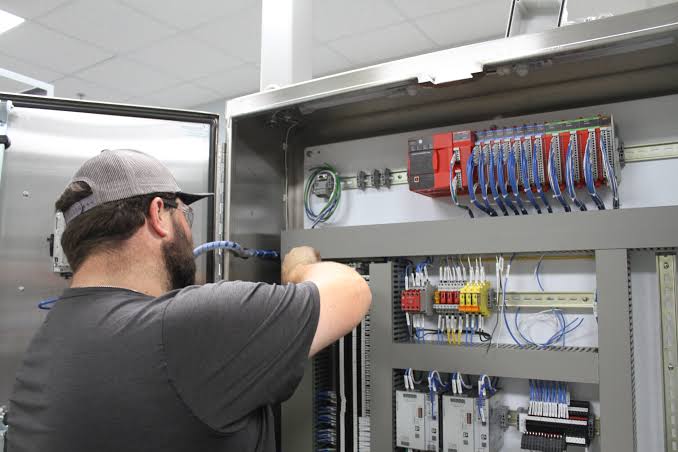
A PLC migration often takes place during a scheduled maintenance shutdown. Before that window begins, engineers prepare hardware, verify wiring requirements, and organize the installation sequence. They also preserve copies of existing programs, controller settings, and network configurations. These records provide a reference if unexpected problems occur during commissioning.
Physical installation requires equally careful planning. New controller racks may have different dimensions, power requirements, and terminal arrangements from the equipment they replace. Technicians must confirm panel space, wiring condition, and proper labeling before disconnecting anything. Completing these checks ahead of time reduces the amount of troubleshooting needed while production equipment remains unavailable.
Testing Machine Behavior Before Production Resumes
Successful PLC migration involves more than confirming that the controller powers on. Engineers verify input and output signals, communication connections, alarms, and individual machine functions. They then test operating sequences to make sure connected equipment responds correctly. Safety-related functions require appropriate validation by qualified personnel, particularly where controller changes affect interlocks or machine movement.
Commissioning may also reveal problems that did not appear during offline testing. Actual production loads, equipment timing, and interactions between machines can expose unexpected behavior. Integrators work with plant personnel to resolve these issues, document final adjustments, and confirm that operators understand any changes to normal procedures.
Documentation and Technical Support After the Migration
A replacement controller should leave the maintenance department better prepared for future repairs. Updated electrical drawings, PLC program backups, network diagrams, and hardware records help technicians identify faults without relying on outdated information. Training should also cover new diagnostic tools, alarm displays, and procedures for restoring controller programs.
R.L. Consulting provides Allen-Bradley PLC programming, industrial control system upgrades, electrical controls engineering, and related technical support for manufacturing facilities. Companies preparing to replace aging PLC-5 or SLC 500 equipment can consult R.L. Consulting about migration planning, controller compatibility, programming changes, and commissioning requirements. Its industrial automation services can help facilities address the technical challenges of moving to newer control systems while maintaining dependable equipment operation.
